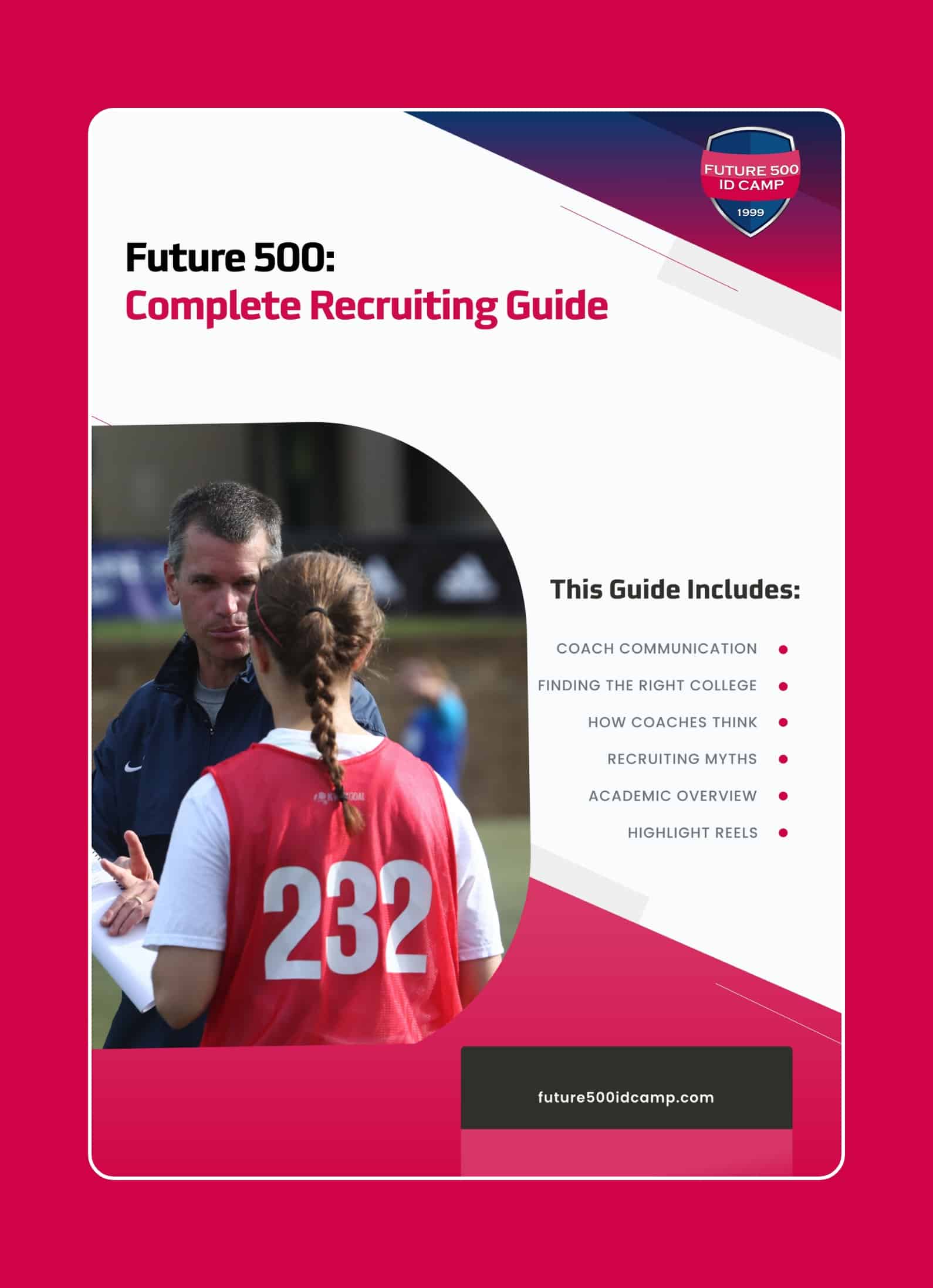

3 More Harmful College Soccer Recruiting Myths
Participating in college soccer is becoming increasingly competitive each year, as more student-athletes vie for limited roster spots at colleges across the country. For families experiencing the process for the first time, the college soccer recruiting journey can feel overwhelming and confusing.
What makes it even more challenging are the many harmful recruiting myths that lead families astray. These misconceptions often arise from misunderstandings about how NCAA recruiting works, and they can hinder even the most talented athletes from achieving their goals.
To help you succeed, here are three more harmful college soccer recruiting myths that every student-athlete and their family should know—and how to avoid them.
Myth #1: Good Grades Don’t Matter If You’re a Good Athlete
One of the most damaging myths in college soccer recruiting is the belief that athletic talent alone is enough to secure a roster spot. The truth is, grades matter just as much as athletic ability in the recruiting process.
While some colleges may be able to slightly relax their admissions standards to secure a top recruit, these “dips” in academic requirements have limits. If a student-athlete falls below a college’s baseline for admissions, they simply won’t be admitted—no matter how talented they are.
Coaches want athletes who will positively represent their program and university both on and off the field, and good grades play a critical role in that equation. Strong academics not only make you a more attractive recruit, but they also demonstrate discipline, time management, and the ability to succeed at the collegiate level.
Additionally, once you’re recruited, maintaining good grades is essential for staying eligible to compete and retaining scholarships. Your academic performance should complement your athletic ability, not act as a hurdle to overcome during recruitment.
Key Takeaway: Focus on excelling in the classroom as much as you do on the field. Strong grades will set you apart in the competitive recruiting process and set the foundation for a successful college career.
Myth #2: If I’m Good Enough, the College Coaches Will Find Me
Many student-athletes believe that if they’re talented enough, college coaches will naturally discover them. While this idea might seem appealing, it’s simply not true for the vast majority of recruits.
Here’s why:
- Recruiting Budgets Are Limited: Outside of NCAA Division I football and basketball, most college programs have modest recruiting budgets. Coaches must be strategic about where they look for talent, and they often prioritize local players or athletes they encounter through targeted recruiting events.
- Proactivity is Key: If you wait for coaches to find you, you might be waiting forever—even if you’re a standout player. Instead, it’s up to you to proactively contact coaches, attend ID camps, and showcase your skills.
For example, Future 500 ID Camps offer a unique opportunity to get seen by college coaches from a wide variety of programs, increasing your exposure without relying on luck.
Key Takeaway: Talent alone isn’t enough. Take charge of your recruiting journey by reaching out to coaches, attending showcases, and making yourself visible. Waiting for coaches to find you is one of the most harmful recruiting myths to believe.
Myth #3: College Recruiting Companies Are My Best Shot
Many student-athletes turn to college recruiting companies, believing these platforms are their best chance of being recruited. These companies often claim to have thousands of college coaches on their platforms and encourage users to send mass emails to maximize their chances.
However, this approach is flawed for several reasons:
- Coaches Dislike Mass Emails: A Future 500 ID Camp survey of 100 college coaches revealed that only 5% of coaches appreciated the typical mass email communication sent from recruiting platforms. Most coaches prefer personal, targeted communication.
- Impersonal Strategies Don’t Work: Sending hundreds of generic emails is unlikely to get you noticed. College coaches want to hear directly from athletes in a personalized, thoughtful way that shows genuine interest in their program.
Rather than relying on impersonal mass email strategies, focus on direct, customized communication. This ensures your communication is meaningful and effective.
Key Takeaway: Don’t waste time on mass email strategies from recruiting companies. Instead, focus on personal, direct communication with a smaller list of schools that are the best fit for your goals and abilities.
How to Avoid These Harmful Recruiting Myths
Understanding these myths is the first step to building a successful recruiting strategy. Here’s how you can avoid falling into the trap of common misconceptions:
- Prioritize academics alongside athletics. Good grades will open doors and make you a stronger candidate.
- Take control of your recruiting journey by reaching out to coaches and attending ID camps like Future 500.
- Focus on quality over quantity when communicating with coaches. Personal emails to carefully selected schools are far more effective than mass messaging.
By avoiding these harmful recruiting myths, you’ll position yourself for success in the competitive world of college soccer recruiting.
Why Future 500 ID Camps Are the Right Choice
If you’re looking for the best way to connect with college coaches and stand out in the recruiting process, attending Future 500 ID Camps is an excellent step. With camps in Philadelphia and Boston, Future 500 offers:
- Exposure to 50 College Coaches at Every Camp: Coaches from NCAA Division I, II, III, and NAIA programs attend to evaluate players in person.
- Direct Feedback: Learn where you stand in the recruiting landscape and what you can improve.
- Innovative Tools: From game film to personalized communication strategies, Future 500 equips you with everything you need to succeed.
Don’t let myths or misinformation hold you back—take action, connect with coaches, and take control of your recruiting future.
Final Thoughts
The college soccer recruiting process is challenging, but you can avoid unnecessary setbacks by steering clear of these harmful recruiting myths:
- Believing that good grades don’t matter.
- Assuming college coaches will find you on their own.
- Relying on impersonal recruiting companies to handle your process.
Instead, focus on building a strong academic record, proactively reaching out to coaches, and attending events like Future 500 ID Camps to showcase your skills and gain exposure. With the right mindset and strategy, you can turn the recruiting process into an exciting opportunity to achieve your dream of playing college soccer.