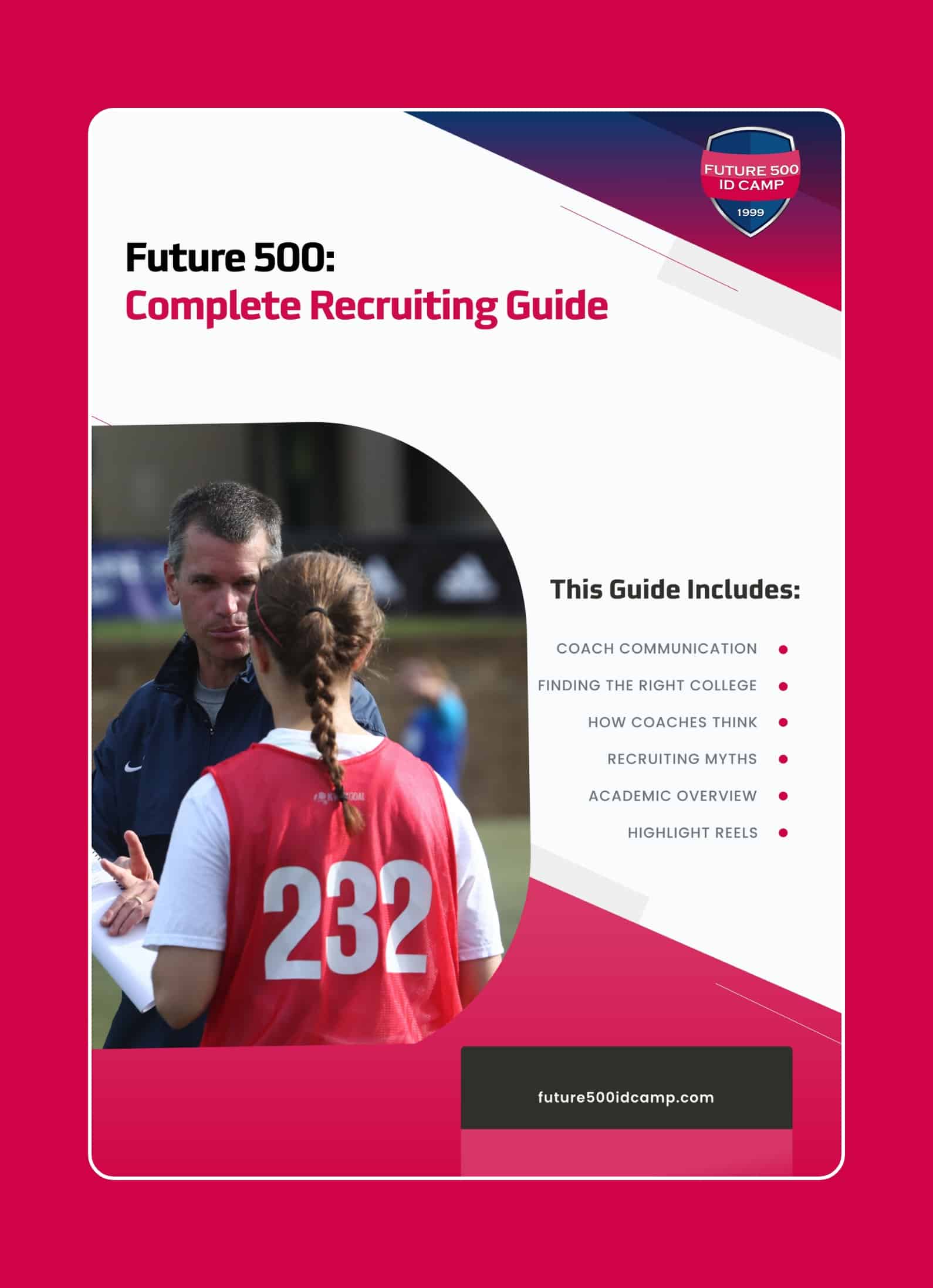

HOW TO CHOOSE A COLLEGE: 7 KEY QUESTIONS TO ASK YOURSELF
The college recruiting process can feel long and stressful, but it’s also one of the most important decisions you’ll make as a student-athlete. Choosing the right college can mean the difference between having an incredible four-year experience at a school that fits your needs or attending a program that falls short of your expectations.
For athletes, the process involves more than just finding a great soccer program—it’s about considering all the factors that contribute to your success both on and off the field. So, how do you choose a college that’s right for you?
Here are 7 key questions to ask yourself as you navigate this important decision.
1. What if I Can’t Play?
It may sound strange, but starting your college search with athletics as the sole focus can be risky. You need to ask yourself:
“If I had a career-ending injury, would I still be happy at this college?”
If the answer is no, it’s best to remove that school from your list. Far too often, student-athletes choose a college based solely on their sport, only to transfer later if they get injured or find the athletic experience isn’t what they expected.
At Future 500 ID Camps, we feature top colleges from a variety of divisions, locations, and settings, ensuring players are exposed to many different schools that could be a great fit for both their academic and athletic goals.
See Boys ID Camps here and Girls ID Camps here.
2. Where Do I NOT Want to Go to College?
This is one of the most important questions to ask yourself early in the process. Eliminating colleges based on location, size, or other deal-breakers can save you a lot of time and help you focus on schools that truly align with your needs.
For example:
- If you’re not comfortable living far from home, you can narrow your list to colleges within a specific radius.
- If you dislike cold weather, focus on schools in warmer climates.
- If you’re not drawn to rural areas, look for colleges in urban settings.
Even if a team has a great soccer program, it’s important to consider whether the overall college environment feels like a good fit.
3. What Do I Want to Study?
This might seem like an obvious question, but you’d be surprised how many students add colleges to their list without confirming whether the school offers their desired major.
Remember: Although some student-athletes go on to play professionally, the majority do not. That’s why it’s critical to choose a school that provides a strong academic foundation and a degree that will set you up for success after graduation.
Future 500’s ID Camps feature a variety of top colleges, giving players the chance to connect with programs that match their academic interests.
4. Where Do I Want to Study?
Your college will be your home for four years, so you’ll want to be comfortable with the location. Here are a few questions to help guide your decision:
- How far from home do I want to live? Most students attend schools within 100 miles of their home.
- Do I prefer a city or a quieter, rural area?
- What kind of climate do I enjoy? Warm weather, cold weather, or something in between?
By considering these factors, you can narrow down your list to schools in regions that align with your preferences. At Future 500 ID Camps, we feature college coaches from across the country, giving you exposure to programs in locations that might be the perfect fit for you.
5. What Size School Do I Want?
There’s a significant difference between a private college with 2,000 undergraduates and a public university with 20,000 students. While some students instinctively know whether they want a small, medium, or large campus, others need to experience it firsthand to decide.
Visiting campuses during the school year is one of the best ways to get a sense of a school’s size and atmosphere. Attend an open house, walk around the campus, and talk to current students to get a feel for what life is like there.
6. Do I Want a Secular or Religious School?
Many private colleges have religious affiliations (e.g., Christian, Catholic, Baptist), but the extent to which this impacts daily student life varies. At some schools, religion plays a central role, while at others, it’s more of a historical association.
When visiting campuses, ask questions to understand how the school’s religious affiliation might influence academics, student activities, and overall campus culture.
7. Can I Afford This College?
Finances are a critical factor in choosing a college. While athletic scholarships and financial aid can help, it’s important to have a clear understanding of the costs involved.
Every college is required to have a Net Price Calculator on their website, which can provide an estimate of your annual costs after factoring in financial aid. Use this tool to get a realistic sense of what each school will cost your family.
If the thought of graduating with six figures in student loan debt feels overwhelming, consider alternatives like:
- Starting at a community college and transferring to a four-year school.
- Attending a college within commuting distance to save on housing costs.
- Exploring merit-based and need-based aid options.
Start Your College Search with Confidence
Thoroughly evaluating these 7 key questions will help you narrow down your options and focus on colleges that are a great fit for your academic, athletic, and personal goals. Remember, the goal isn’t just to find a school where you can play soccer—it’s to find a school where you’ll thrive on and off the field.
If you’re ready to jumpstart your journey to college and gain exposure to top programs, Future 500 ID Camps are the perfect place to begin.
Sign up for a Future 500 ID Camp today and take the first step toward finding your dream college!
FAQs
What’s the most important factor to consider when choosing a college?
It’s important to look at the whole picture: academics, location, size, cost, and athletics. A school that fits your needs in all these areas will likely provide the best overall experience.
Why should I consider non-athletic factors when choosing a college?
Your college experience should be fulfilling both on and off the field. If soccer doesn’t work out (due to injury or other reasons), you’ll want to be at a school that still feels like the right fit.
How do Future 500 ID Camps help with the college search process?
Future 500 ID Camps feature 50 top college coaches from a variety of divisions, locations, and academic focuses, giving players exposure to schools that could be a great fit for them.
Can I afford to attend a private college?
Many private colleges offer generous financial aid packages. Use their Net Price Calculator to estimate costs and explore merit-based and need-based aid options.
What’s the best way to decide if a school’s size is right for me?
Visit campuses during the school year to see what daily life is like. This will help you determine if you prefer a small, medium, or large campus environment.