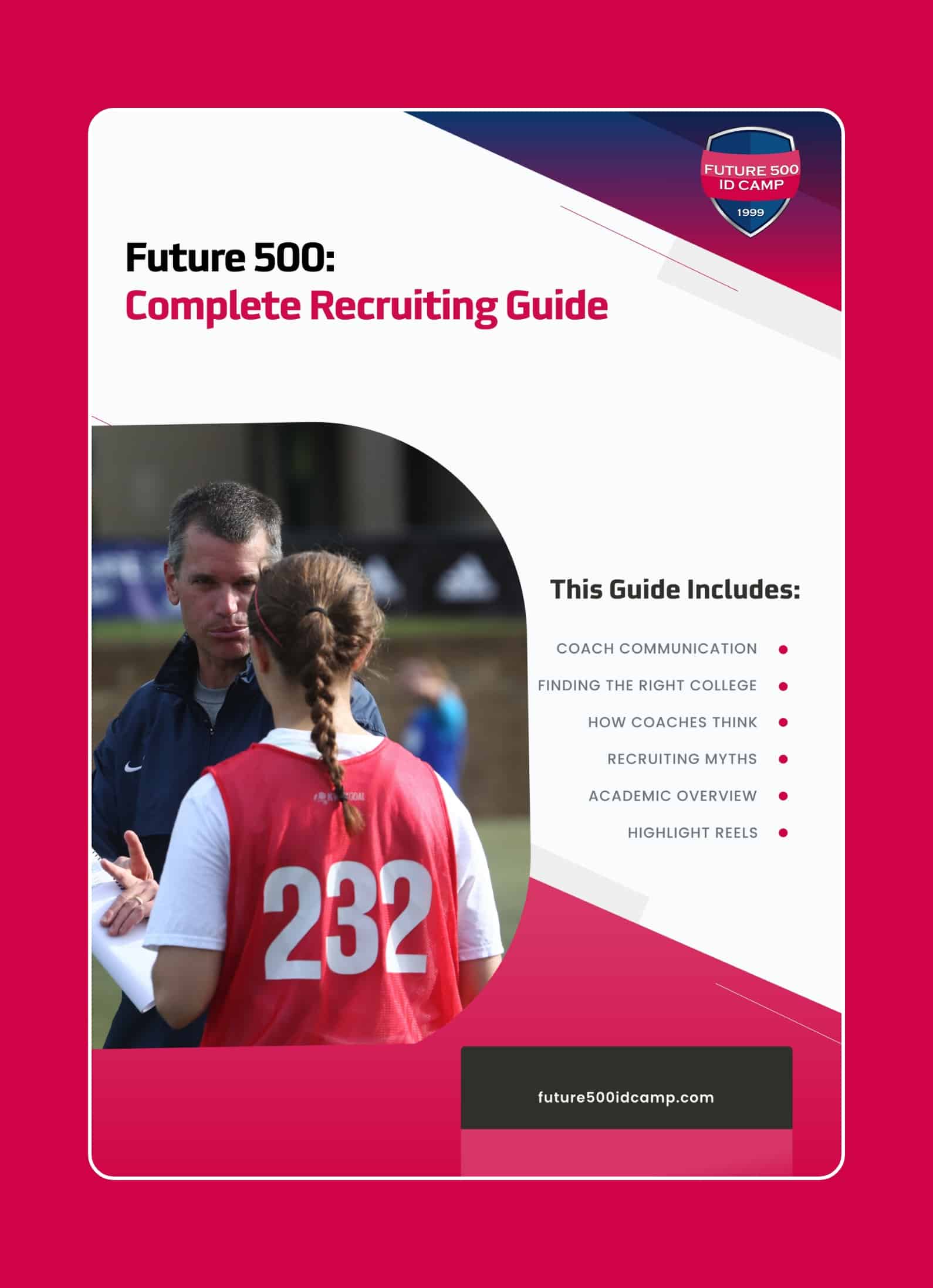

What Division Should You Play? 4 Tips To Help You Decide
Determining the right division to play in college soccer can feel overwhelming, but it’s a critical step in the recruiting process. Many players and their families struggle to evaluate where they fit in terms of skill level and which NCAA division—Division I, II, or III—is the best match for their goals. Understanding your abilities, getting feedback, and researching different divisions will guide you to the right decision.
By following these four tips, you’ll gain clarity on what division you should play in college soccer and take meaningful steps toward finding the perfect program for your talents and aspirations.
Assess Recruiting Emails to Gauge Interest
One of the most straightforward ways to assess your level as a player is to evaluate the recruiting emails you receive from college coaches. After attending tournaments, showcases, or ID camps, you’ll typically get emails from interested coaches if they see potential in you as a recruit.
At Future 500 ID Camps, for example, players benefit from exposure to 50 top college coaches at each camp, thanks to the Maximum Exposure Matrix. This ensures that players are seen by coaches from a variety of NCAA divisions, providing a realistic sense of where they might fit.
Post-camp communication is a strong indicator of interest from college programs. In fact, 94.3% of coaches who attended Future 500 in 2024 followed up with multiple players after camp. If you receive emails from NCAA Division II or III programs but none from Division I schools, that’s a sign that your level aligns better with those divisions. Paying attention to the types of programs contacting you is a key step in understanding your fit.
Speak with Current Student-Athletes for Insight
Another valuable step is to speak with current or former student-athletes who have played college soccer. If you’re targeting a high-level NCAA Division III program, for example, someone who has competed at that level can provide honest feedback about what it takes to succeed.
It’s easy for parents or friends to say, “You’re good enough to play at the Division I level!” but unless they’ve played or coached at that level, their judgment may not be reliable. Having candid conversations with players who’ve been in your shoes can help you get an accurate assessment of your abilities.
At Future 500 ID Camps, you’ll have the chance to interact with current college players who serve as counselors. These players provide valuable advice and can give you a realistic sense of where you stand in the recruiting landscape.
Attend College Soccer Games to Evaluate the Level
Watching college soccer games—whether in person or online—is an excellent way to evaluate your potential fit. Many players and families enter the recruiting process with unrealistic expectations, often because they’ve never seen a collegiate game in action.
By watching games, you can observe the speed, skill, and physicality required at each division level. Ask yourself honestly, “Would I compete well if I were playing in this game?” This reflection can help you narrow your focus to divisions where you’re more likely to thrive.
If you can’t attend games in person, most college soccer programs offer live streams or replays on their websites. Make use of these resources to familiarize yourself with the demands of different NCAA divisions.
Consult with Your Coaches for Honest Feedback
Your coaches are one of your most valuable resources during the recruiting process. They’ve likely watched players with similar abilities go through the recruiting journey, and they understand how skill levels align with specific divisions and programs.
Schedule a conversation with your club or high school coach to discuss your goals and get their honest feedback on your potential. Ask specific questions like:
- “Do you think I could compete at the NCAA Division I level?”
- “What level do you think suits my current abilities best?”
- “Have you had other players recruited by [specific schools or divisions], and how do I compare to them?”
Your coach’s input can provide clarity and help you focus your recruiting efforts on schools that align with your abilities and aspirations.
How Future 500 ID Camps Can Help You Decide
If you’re still unsure about what division you should play in college soccer, attending an ID camp like Future 500 can be a game-changer. Future 500 ID Camps are designed to maximize exposure to college coaches from NCAA Division I, II, III, and NAIA programs, giving you the chance to showcase your skills in front of coaches from all levels.
By attending a camp, you’ll receive direct feedback from college coaches, which can help you better understand where your abilities fit in the competitive landscape of college soccer. With camps in Philadelphia and Boston, Future 500 offers the perfect opportunity to get noticed and gain clarity on your college soccer future.
Final Thoughts
Determining what division you should play in college soccer is an important step in your recruiting journey. By evaluating the recruiting emails you receive, speaking with current student-athletes, watching college games, and consulting with your coaches, you can make an informed decision about where your skills align.
Remember, the recruiting process isn’t about playing at the highest level possible—it’s about finding the right fit for your abilities, goals, and academic aspirations. Whether you’re targeting NCAA Division I, II, III, or NAIA programs, staying realistic and proactive will set you up for success.
Finally, don’t underestimate the value of attending events like Future 500 ID Camps, where you can connect with college coaches, showcase your abilities, and gain insight into the right division for you. With the right approach and resources, you’ll be on your way to achieving your dream of playing college soccer.
FAQs
How do I figure out what division is right for me in college soccer?
Start by evaluating recruiting emails, watching college games, speaking with current players, and consulting your coaches. These steps can help you understand where your abilities fit.
Are recruiting emails a good indicator of my skill level?
Yes, the types of schools contacting you after events like ID camps or tournaments can give you a sense of where your level aligns within NCAA or NAIA divisions.
What’s the difference between NCAA Division I, II, and III soccer?
NCAA Division I programs tend to have the highest level of competition and athletic scholarships, Division II offers a balance of academics and athletics, and Division III emphasizes academics with fewer athletic scholarships.
How can Future 500 ID Camps help me find the right division?
Future 500 ID Camps provide exposure to college coaches from all divisions, giving you a chance to showcase your skills and receive feedback on your potential fit.
Why is watching college games important for recruits?
Watching games helps you understand the level of play at each division, giving you a realistic sense of whether you could compete at that level.
When should I start asking my coaches about college soccer?
The earlier, the better. Ideally, start the conversation during your freshman or sophomore year to get guidance on what level you should target and how to prepare.