


Recruiting Tips & Blog

How to Read a College Soccer Roster (And Why It Matters for Your Recruiting)
You’re talking to a coach who’s recruiting you hard. They say all the right things: “We love your game,” “You’d be a great fit here,” “We see you contributing right away.”
But have you actually looked at their roster?
Reading a college soccer roster is one of the most important research skills you can develop during recruiting. It reveals playing time opportunities, coaching patterns, and red flags that coaches won’t tell you about in recruiting conversations.
This guide breaks down how to analyze a college roster so you can make smarter recruiting decisions.
Where to Find College Rosters
Every college soccer program posts their roster on the team’s athletics website.
SAT, ACT, and College Soccer: Why Your Test Scores Matter More Than You Think
Most players think recruiting is all about soccer ability. And yes, being a good player is critical.
But here’s what many players don’t realize: Your SAT or ACT score can unlock thousands of dollars in academic merit scholarships—money that stacks on top of athletic scholarships in some divisions.
Higher test scores also open doors to academically competitive schools that wouldn’t recruit you otherwise.
This guide breaks down how standardized tests affect your recruiting and why you should take them seriously.
Do You Need SAT or ACT Scores to Play College Soccer?
It depends on the school. Many colleges are now “test-optional,” meaning they don’t require SAT or ACT scores for admission.
The Post-Camp Follow-Up Emails That Keep You on Coaches’ Radars
You just finished an ID camp. You played well, met coaches, and made some good impressions.
Now what?
Most players walk off the field and never follow up. That’s a huge mistake. The coaches who watched you play won’t remember you in two weeks unless you stay on their radar.
This guide breaks down exactly how to follow up after ID camps to turn exposure into recruiting opportunities.
Why Post-Camp Follow-Up Matters
Coaches evaluate 50-100 players at a single ID camp. Even if you played well, you’re one of dozens of talented players they saw that weekend. Following up serves three purposes: Reminds coaches who you are: Refreshes their memory of your performance Shows genuine interest: Proves you’re serious about their program Opens the door to conversation: Gives coaches a reason to email you back Players who follow up get recruited.
NAIA Soccer: The Alternative Pathway Nobody Talks About
Most players focus exclusively on NCAA programs (D1, D2, D3) and overlook the NAIA entirely. That’s a mistake.
NAIA (National Association of Intercollegiate Athletics) schools offer competitive soccer, generous scholarships, and opportunities that many NCAA programs can’t match.
This guide breaks down what NAIA soccer is, how it compares to the NCAA, and why it might be the perfect fit for your college career.
What Is the NAIA?
The NAIA is a separate governing body from the NCAA that oversees athletics at approximately 250 colleges, mostly smaller private schools. NAIA schools compete in 23 sports, including men’s and women’s soccer. NAIA schools are typically: Smaller (1,000-3,000 students) Private colleges or Christian universities Located in the Midwest, South, and West Academically solid with strong student-athlete supportNAIA vs NCAA: Key Differences
Scholarship Rules NCAA D1 Men’s Soccer: 9.9 scholarships divided among 28+ players NAIA Men’s Soccer: 12 full scholarships Result: NAIA programs have more scholarship money to distribute NCAA D1 Women’s Soccer: 14 scholarships NAIA Women’s Soccer: 12 full scholarships Result: Slightly less than D1, but still substantial Big difference: NAIA allows academic and athletic scholarships to stack, which can make NAIA schools more affordable than NCAA D1 schools.
International Players: Your Guide to U.S. College Soccer Recruiting
If you’re an international player interested in playing college soccer in the United States, you face unique challenges that domestic players don’t—visa applications, TOEFL exams, NCAA eligibility clearance, and navigating recruiting from thousands of miles away.
But here’s the good news: U.S. college programs actively recruit international players. In fact, international players make up 10-15% of D1 rosters and even higher percentages at some D2 and D3 programs.
This guide breaks down everything you need to know about playing college soccer in the U.S. as an international player.
Why U.S. College Soccer?
International players choose U.S. college soccer for several reasons: Combine soccer with education: Unlike professional academies, U.S.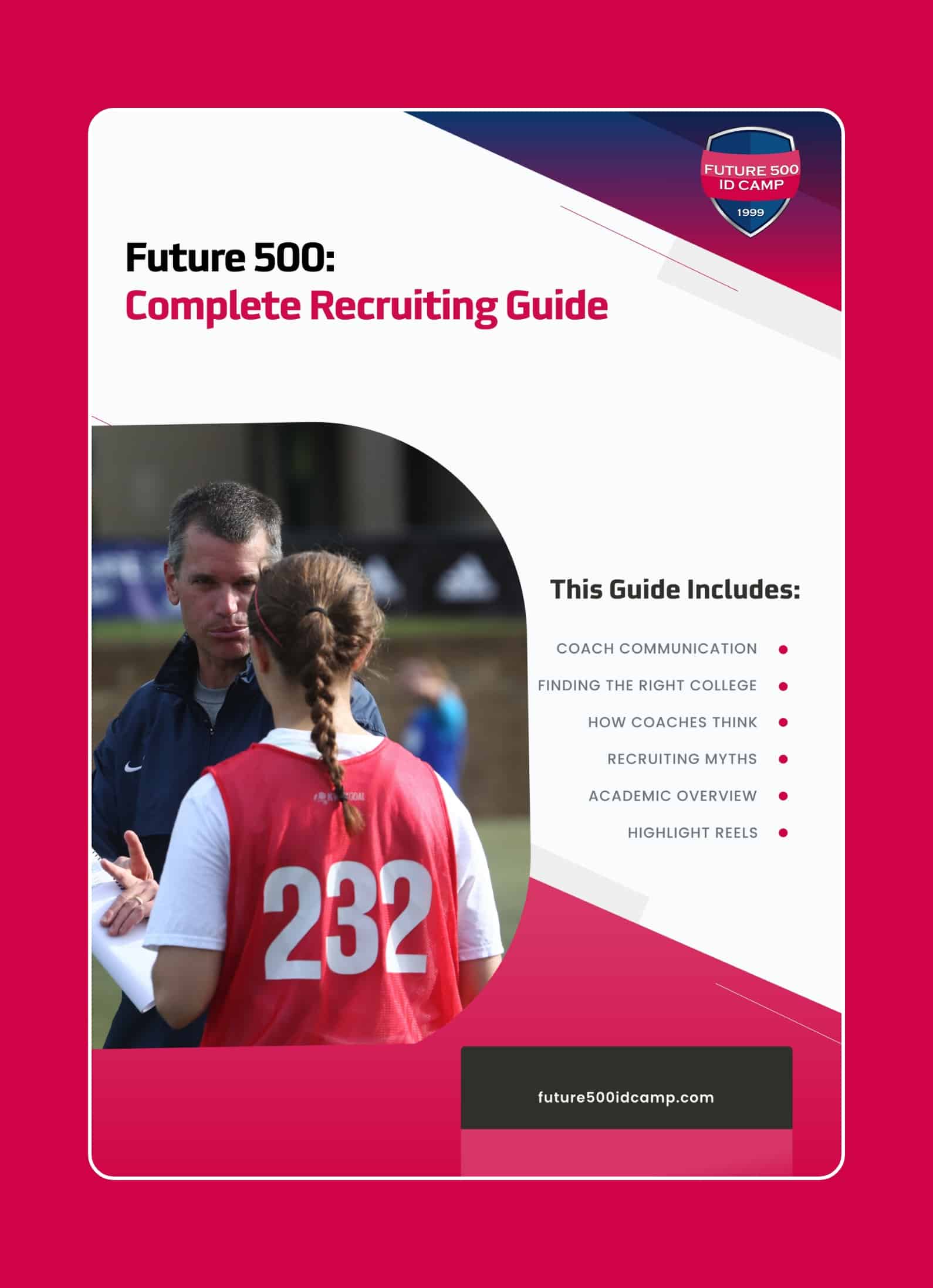
Want Our 40 Page Free Recruiting Guide?
Enter your email, and you will receive our comprehensive Recruiting Guide.