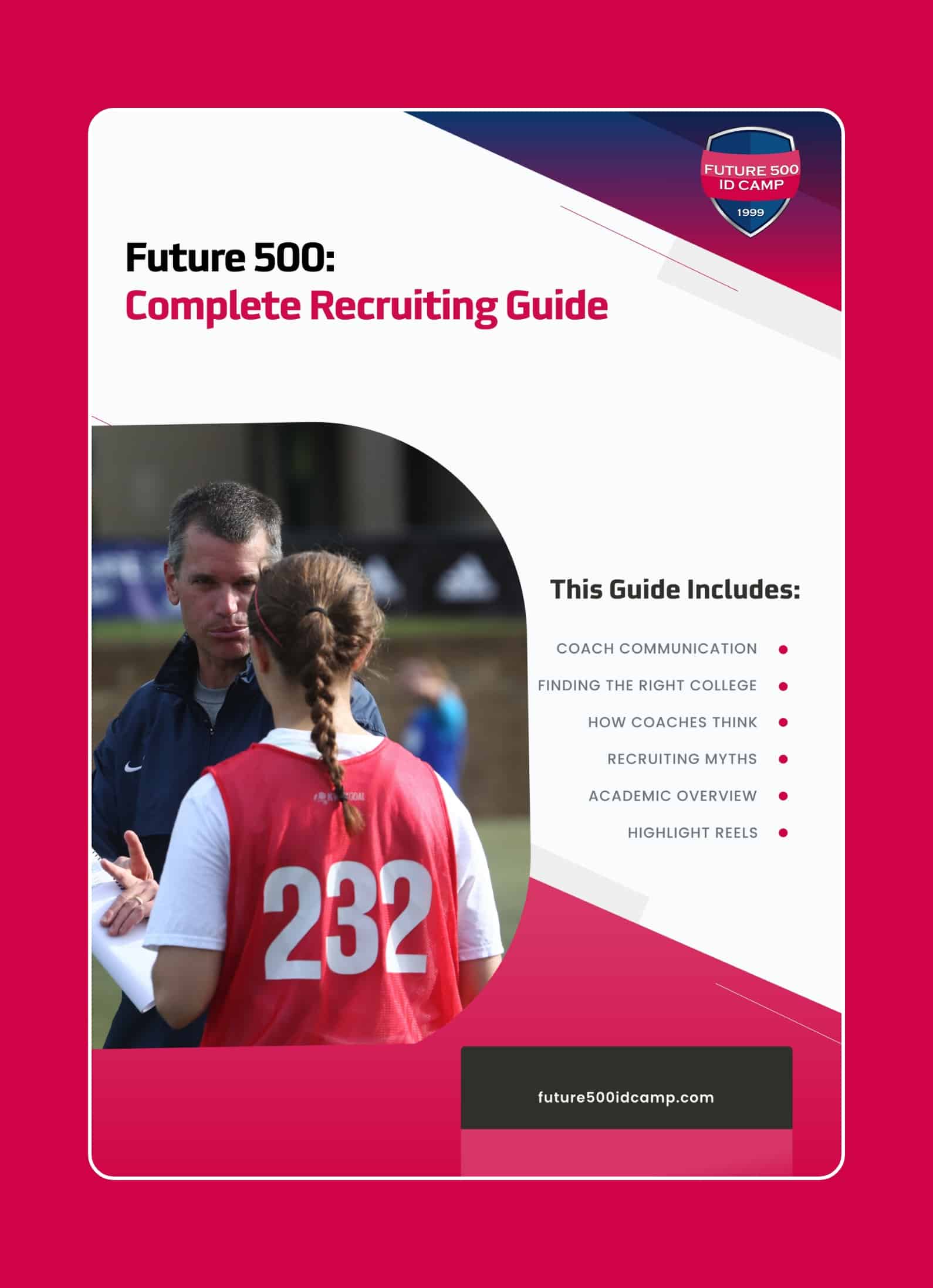

Showcase Tournaments vs ID Camps: Which Is Worth Your Money?
You have a limited budget for recruiting exposure. Should you spend it on showcase tournaments with your club team or ID camps hosted by college programs?
Both can help you get recruited, but they work very differently. Understanding the pros and cons of each helps you invest your time and money strategically.
This guide breaks down showcase tournaments versus ID camps so you can make smart decisions about where to get exposure.
What Are Showcase Tournaments?
Showcase tournaments are multi-day events where club teams compete while college coaches watch from the sidelines. Your club team registers, plays 3-5 games, and coaches scout players they’re interested in.
Common showcase events:
ECNL showcases
DA (Development Academy) showcases
Jefferson Cup
Disney Soccer Showcase
Surf Cup
How Showcases Work:
Your club team pays an entry fee ($500-1,500)
You play multiple games over a weekend
College coaches attend and watch games
Coaches identify players they like and follow up
What Are ID Camps?
ID (Identification) camps are recruiting events hosted by college programs where you compete in drills and small-sided games directly in front of college coaches. You register individually, and the college staff evaluates you intensively over 1-3 days.
Types of ID camps:
Single-school camps (hosted by one college)
Multi-school camps (featuring 20-50 college coaches)
Prospect camps (college-hosted camps for recruited players)
How ID Camps Work:
You register individually ($200-500)
You compete in skills sessions, small-sided games, and scrimmages
College coaches watch you play and evaluate your ability
Coaches can talk to you directly and exchange contact info
Showcase Tournaments: Pros and Cons
Pros:
1. Team Environment
You’re playing with teammates you know, in a familiar system. This can showcase your ability in a more natural setting.
2. Full Game Competition
Coaches see you play full-sided 11v11 games, which reveals your tactical understanding and game management.
3. Large Coach Attendance
Major showcases attract 100-300 college coaches, giving you broad exposure.
4. No Extra Cost (Usually)
Your club typically pays the showcase entry fee, so you’re not paying out of pocket (beyond club dues).
Cons:
1. Coaches Don’t Know Who You Are
At showcases, you’re jersey #14 on a team of 18 players. Unless you dominate the game or a coach already knows your name, you can blend into the crowd.
2. Limited Playing Time
If you’re not a starter or you sub out after 40 minutes, coaches might not see enough of you to evaluate properly.
3. Coaches Watch Multiple Games
College coaches bounce between fields watching different games. They might only see 20 minutes of your game before moving on.
4. No Direct Interaction
You can’t talk to coaches during showcases (NCAA rules). If they’re interested, they have to track you down later or email you.
5. Weather and Field Conditions
Bad weather or poor field conditions can ruin your performance and waste the exposure opportunity.
ID Camps: Pros and Cons
Pros:
1. Direct Evaluation
Coaches know exactly who you are. You’re wearing a numbered pinnie with your name, and coaches have your profile in front of them.
2. Guaranteed Playing Time
You’re not competing with teammates for minutes. Everyone gets equal touches and evaluation time.
3. Coaches Watch You Intensively
At ID camps, coaches aren’t bouncing between fields. They’re focused entirely on evaluating you and the other campers.
4. Direct Communication
You can talk to coaches during breaks, ask questions, and make a personal impression beyond just your soccer ability.
5. Targeted Exposure
You can choose camps featuring schools you’re actually interested in, rather than hoping the right coaches show up at showcases.
6. Level Playing Field
You’re competing against other individual players, not against organized club teams. This can help you stand out if your club team isn’t elite.
Cons:
1. Out-of-Pocket Cost
You pay the registration fee directly ($200-500 per camp). This adds up if you attend multiple camps.
2. No Team Context
Coaches see you in drills and small-sided games, but not in a full 11v11 game where your tactical awareness and positioning really show.
3. Competing with Strangers
You don’t have chemistry with other campers, which can make you look less polished than you are with your regular team.
4. Variable Coach Quality
Some ID camps have 50 college coaches. Others might have 10—and they might not be from schools you care about. Always check the confirmed coach list before registering.
Which One Is Better for Recruiting?
The answer depends on your situation:
Showcases Are Better If:
You’re a starter on a strong club team
You play well in competitive game environments
Your club attends high-profile showcases with guaranteed coach attendance
You’re already on coaches’ radars and they’re coming to watch you specifically
ID Camps Are Better If:
You’re not getting consistent playing time at showcases
You want direct interaction with college coaches
You need exposure beyond your club’s showcase schedule
You want to target specific schools or divisions
You’re a late bloomer who needs to show coaches you can compete
The ROI (Return on Investment) Question
Let’s compare the costs:
Showcase Tournament:
Entry fee: Covered by club (usually)
Travel costs: $500-1,500 (hotel, food, flights if needed)
Coach exposure: 50-200 coaches watching multiple games
Your visibility: Depends on playing time and performance
Total out-of-pocket: $500-1,500
ID Camp:
Registration: $200-500
Travel costs: $200-800 (depending on location)
Coach exposure: 10-50 coaches watching you directly
Your visibility: Guaranteed evaluation time
Total out-of-pocket: $400-1,300
ID camps often provide better ROI because you’re guaranteed coach attention, whereas showcases depend heavily on your playing time and whether coaches happen to be watching your game.
How to Choose the Right ID Camp
Not all ID camps are created equal. Before registering, ask:
“How many college coaches are confirmed to attend?” Look for camps with 20+ coaches.
“Which specific schools will be represented?” Make sure schools you care about are on the list.
“What divisions will be present?” Ideally, you want a mix of D1, D2, and D3 coaches.
“What’s the camper-to-coach ratio?” Smaller camps (50-100 campers) give you more visibility than large camps (300+ campers).
“What does the schedule look like?” More playing time = better evaluation opportunity.
The Hybrid Strategy: Do Both
The smartest recruiting strategy combines both showcases and ID camps:
Freshman/Sophomore year: Attend 1-2 ID camps to learn what college coaches look for and start building relationships.
Junior year: Attend 3-4 showcases with your club team AND 2-3 ID camps featuring schools on your target list.
Senior year: If you’re uncommitted, attend 1-2 ID camps at schools still recruiting for your class.
This gives you the broad exposure of showcases plus the targeted, direct evaluation of ID camps.
Red Flags to Watch For
Showcase Red Flags:
Tournaments that advertise “guaranteed coach attendance” but don’t publish actual coach lists
Showcases with registration fees over $2,000 (that’s excessive)
Events that promise scholarships or recruiting guarantees
ID Camp Red Flags:
Camps that won’t share confirmed coach lists before registration
Camps with 500+ campers (you’ll get lost in the crowd)
Camps charging over $600 for a 2-day event (that’s overpriced)
Single-school camps where the coach hasn’t shown interest in you yet (you’re paying to audition for one program)
Take Action This Week
Research ID camps in your region with confirmed coach rosters
Review your club’s showcase schedule and confirm which showcases have strong coach attendance
Budget for 2-3 ID camps during junior year
Email coaches before showcases and ID camps to let them know you’ll be there
Both showcases and ID camps can help you get recruited—but only if you choose the right events and prepare properly. Don’t waste money on exposure opportunities that don’t match your recruiting goals.
Looking for ID camps with confirmed college coach rosters? Search for multi-school events that bring together diverse programs from D1, D2, and D3 so you can compare your options and maximize exposure in one weekend.